
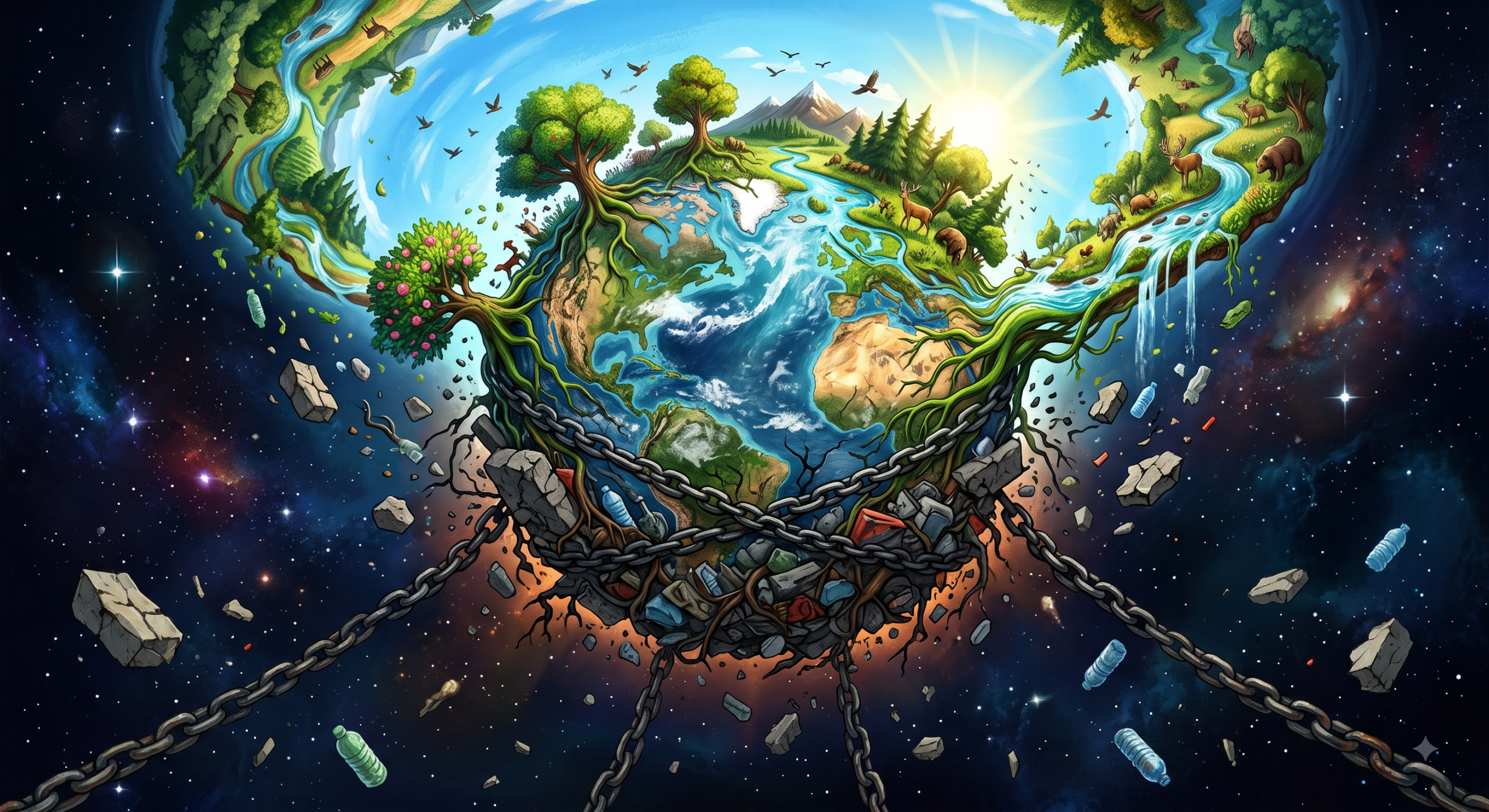
A Letter from the Planet to Humans on Indian Independence Day
Dear Human Beings of India,
I understand that it’s the Indian Independence Day.
There will be flags everywhere, patriotic songs playing in schools and neighbourhoods, speeches about freedom, stories about sacrifice, and a few WhatsApp messages about how fortunate we are to live in an independent country.
I am happy for you. Truly.
After all, I have been around for a very long time (about 4.5 billion years or so) and have watched you build civilizations, cross oceans, invent languages, discover electricity, fly in planes, send machines into space, create phones that can recognise your face and tell you where the nearest coffee shop is. I have also seen you fighting wars and destroying each other with no “humanity”.
But since it is a day when everyone talks about independence, I thought I might take the opportunity to ask for a little independence of my own.
I hope you don’t mind. After all, I have been supporting your experiment called development for quite some time now.
So, if you have a few minutes between the flag hoisting and the Independence Day sales, here is my little wish list.
I would like some independence from plastic
You*have to admit, our relationship has become a little complicated because of something that you made by drilling my depths.
You invented plastic as you wanted something strong, light, inexpensive and incredibly useful, and I have no objection to useful things.
What I find highly amusing, however, is that you now use a material capable of lasting for centuries, or much longer in the environment, to carry something that you intend to use for just ten minutes. For your information, all the billions of tonnes of plastic that you have ever produced since the 1950s still exists on the planet (unless of course you just burn it away and make my atmosphere more toxic)
You put food in plastic containers, carry them home, eat the food and then immediately decide that the container has completed its life’s purpose.
You buy water in a plastic bottle, drink it, and then behave as though the bottle has somehow ceased to exist.
You order something online and receive a box inside another box with paper, plastic, bubble wrap and a small packet containing something that probably did not need to be wrapped at all.
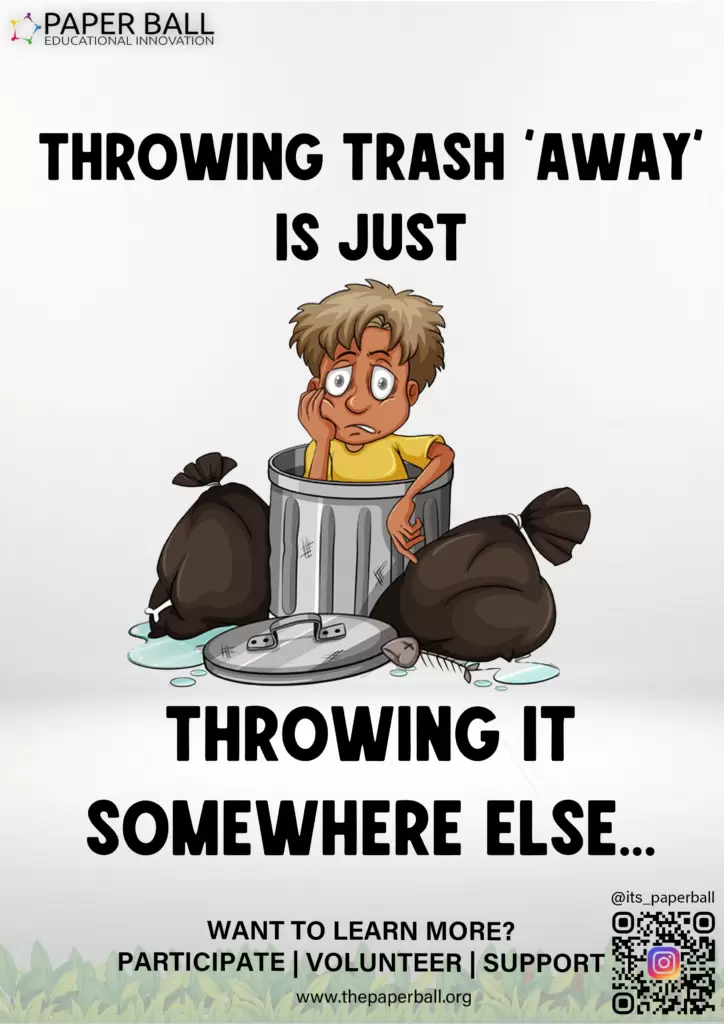
And then you say, “I have thrown it away.”
I have always wondered where exactly you think away is.
There is no awayon this planet.
There is only somewhere else.
So, if you could occasionally choose to refuse unnecessary plastic, reuse something, refill something or simply buy less of something that you already have, I would appreciate it.
I would like independence from being treated as a dumping ground
I have noticed that you have a rather interesting definition of waste management.
You produce something by using everything that I provide as raw materials, decide you no longer want it, put it into a bin and then stop thinking about it.
From your perspective, the story ends there. From mine, it doesn’t.
The food waste goes somewhere. The plastic goes somewhere.
That discarded electronic device goes somewhere. The construction debris goes somewhere.
The sewage goes somewhere too.
Sometimes it reaches a landfill, sometimes a recycling facility, sometimes a drain, sometimes a river and sometimes, unfortunately, places where it was never meant to be.
I am not asking you to stop producing waste completely; even I understand that it might be unrealistic for you. However, if you had looked at nature more closely, you would have realized that nothing is ever a waste in nature!!We work in a closed loop system.
I am simply asking you to remember that waste is not the end of a story.
It is the beginning of another one.
And I would very much like that story to be a little less messy for my health and yours.
I would like some independence from unnecessary consumption
You have become extraordinarily good at convincing yourselves that you need things.
You have things you forgot you bought, things you bought because they were on sale, things you bought because an influencer recommended them, things you bought because they arrived tomorrow, and things you bought because the advertisement suggested that your life would somehow be incomplete without them.
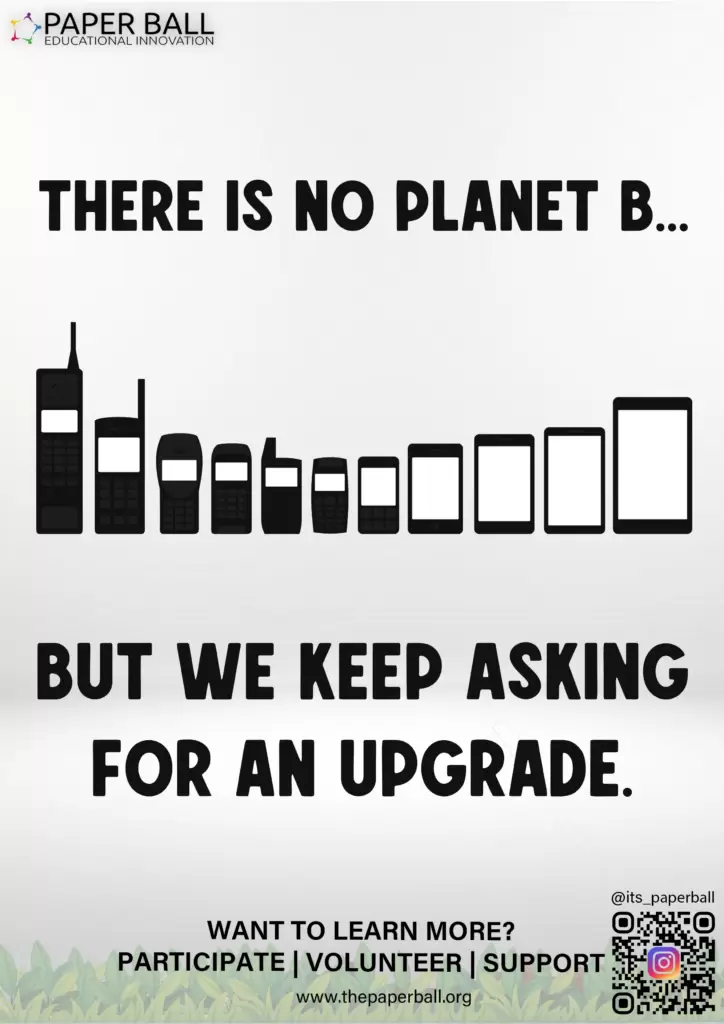
You have cupboards full of clothes and still say, “I have nothing to wear.”
You have perfectly functional phones and feel that the new model is somehow essential.
You replace appliances because a newer version looks better.
You throw away furniture because repairing it seems inconvenient.
You buy objects for a particular occasion and then struggle to find a place to store them afterwards.
I am not against you buying things.
I am simply wondering whether “Do I really need this?” could become a more popular question.
You might be surprised how much freedom there is in needing less.
I would like independence from being squeezed into concrete
I know you need homes. You need roads, schools, hospitals, offices, markets and cities.
You have lots of needs. I still understand.
But every time you look at an open piece of land and immediately visualize a building, I wish you would pause for a moment and ask what else that land might already be doing.
Perhaps it is absorbing rainwater. Or may be it is cooling the neighbourhood.
Perhaps supporting the lives of insects and birds. Perhaps its soil is storing carbon for your benefit.
Perhaps it is part of a wetland or drainage system that you will desperately need during the next heavy rainfall.
A patch of land, that you think is “empty land” is not empty at all. There is life flowrishing there. You simply have to look differently. Start observing if you will and you might be filled with wonder.
And when you replace every open space with concrete, I hope you will remember that rain does not read building plans.
It still needs somewhere to go. So do not wonder the next time your city is flooded, becasue you filled up all open spaces with concrete.
I would like independence for my rivers
This one is particularly important.
You call them rivers, but sometimes you treat them as drains with water in them.
You put sewage into them. You throw plastic into them.
You construct buildings on its floodplains, sucking the life out of rivers. You dump your waste beside them and inside them.
You cover their edges with concrete.
And then, when they become polluted or flood their banks, you wonder what went wrong and then concretize them even more out of your ignorance and need for instant gratification. You do not think long term.
A river is not merely a channel carrying water from one place to another. It is an ecosystem. It has plants, insects, fish, birds, microorganisms, wetlands, floodplains and countless relationships that you may not even notice.
And yes, it also provides services to you.
Remember water that you drink and bathe with.
Then there is groundwater recharge. Biodiversity. Cooling Effect. Flood management. Livelihoods. Recreation. Culture. Memories.
So perhaps this Independence Day, I would like my rivers to become a little more independent from your sewage pipes and garbage bags.
I think they deserve it.
I would like independence for the insects
There are about 1.1 million species of insects that scientists have already discovered and there are millions yet to be discovered. The insects have the largest population. Still, you rarely notice them unless they are bothering you.
A mosquito bites you and suddenly all insects become enemies.
A cockroach enters your kitchen and you declare war.
A caterpillar eats a few leaves and you call it a pest.
A bee enters your home or garden and someone immediately starts screaming.
But insects are doing an extraordinary amount of work quietly, every single day.
Pollination. Decomposition. Nutrient cycling. Food for birds, frogs, reptiles and other animals. Maintaining ecological relationships that ultimately support the systems you depend upon.
Even the insects you don’t particularly like have a role to play.
So, if you could leave a few flowers for the bees, some leaves for the caterpillars and perhaps a little more space for the small creatures that share your surroundings, I would be grateful.
You don’t have to love every insect.
You just need to understand that the planet doesn’t run according to human whims.
I would like independence for my forests
Not necessarily from humans, because humans have lived with forests for thousands of years.
I would like independence from the idea that a forest is valuable only when it can be converted into something else.
A forest is not merely timber waiting to be harvested. It is not vacant land. It is not just scenery. It is home to someone.
It is a living ecosystem that stores carbon, regulates water, supports biodiversity, protects soil and provides livelihoods and cultural value to millions of people (yes the same ones that you call tribals or “adivasis”)
And when you plant ten trees somewhere else after cutting down a mature ecosystem, please remember that your saplings are not immediately equivalent to a mature forest.
A forest is not simply a collection of trees.
It is an ecosystem of relationships that you hardly see because of your selfishness.
I would like independence from being “saved”
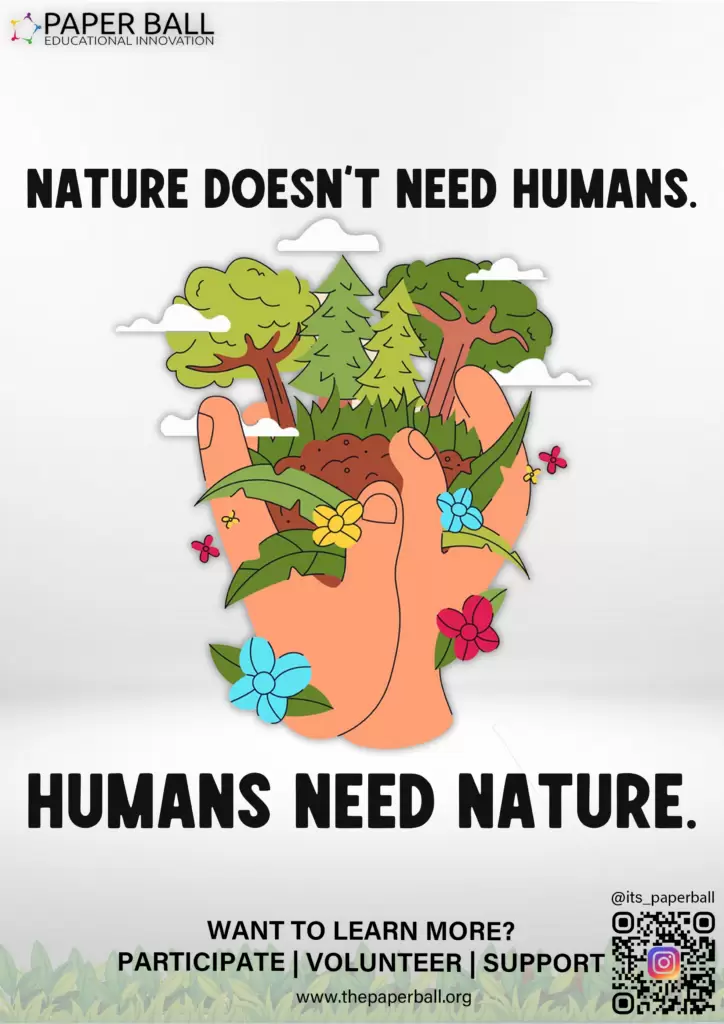
You often say that you want to save the planet.
It is a generous thought.
But, honestly, I am not sure I need saving in quite the way you imagine.
The planet has survived ice ages, volcanic eruptions, asteroid impacts and enormous climatic changes.
I will probably be here long after your civilisation has changed beyond recognition.
What I am worried about is not whether the planet survives.
I am worried about whether the conditions that allow your civilisation, and millions of other species to thrive, will survive.
So perhaps you don’t need to save me.
Perhaps you need to make your own relationship with me a little less destructive.
And finally, I would like independence from being taken for granted each day
You wake up every morning and breathe air without thinking about it.
You drink water without thinking about the systems that brought it to you.
You eat food without thinking about the soil, rain, farmers, pollinators and ecosystems behind it.
You walk under the shade of a tree without considering the years it took to grow.
You watch birds from your balcony without wondering what they need to survive.
You look at a river and see water.
I see an entire living system. An interconnected whole.
Perhaps that is the biggest independence I am asking for.
Freedom from being invisible.
Look at me. Notice me more often.
Question what is happening around you. Know the tree outside your house.
Watch where your waste goes. Find out where your water comes from.
Spend time with a river or a waterbody. Notice the insects around you.
Listen to the birds before reaching for your phone. Ask your children to observe rather than simply consume information about nature.
Because you cannot care for something you never notice.
And you cannot protect something you never understand.
So, dear Humans of India, enjoy your Independence Day.
Fly your flags. Sing those songs. Celebrate the freedom that generations before you fought so hard to secure. But somewhere between the celebrations, perhaps take a quiet walk outside and look around. You may discover that while you are celebrating your independence, the rest of us are quietly asking for ours.
The river would like freedom from sewage.
The soil would like freedom from chemicals and endless disturbance.
The forest would like freedom from unnecessary destruction.
The insects would like freedom from indiscriminate spraying.
The air would like freedom from pollution.
The ocean would like freedom from plastic.
That “empty plot” would like freedom from concretization.
And I, your planet, would simply like you to remember that you are not separate from me.
You are living here.
You are breathing my air. Drinking my water. Eating from my soil. Depending on my ecosystems. And raising your children on this little planet.
So perhaps the most important independence of all is not independence from nature, It is the freedom to live in a way that allows nature, and therefore us, to thrive together.
With affection,
Planet Earth 🌍
P.S.: I am not asking for a gift this Independence Day. Please don’t plant 500 trees for a photograph and forget them afterwards. Just start by looking after the ones already around you.
*“You” in my letter refers specifically to humans who are exploiting me for their selfish gains. You know who “you” are.