
Udbhav – eco-literacy sessions – Part 1
This is a 4-part post on the fundamental eco-literacy sessions with students at two villages of Mahuvad and Aathmanapura in Padra Taluka, with support from Transpek Industry, over the course of three months from October to Dec 2025.
Session 1 at Mahuvad & Aathmanapura – 18-Oct-25
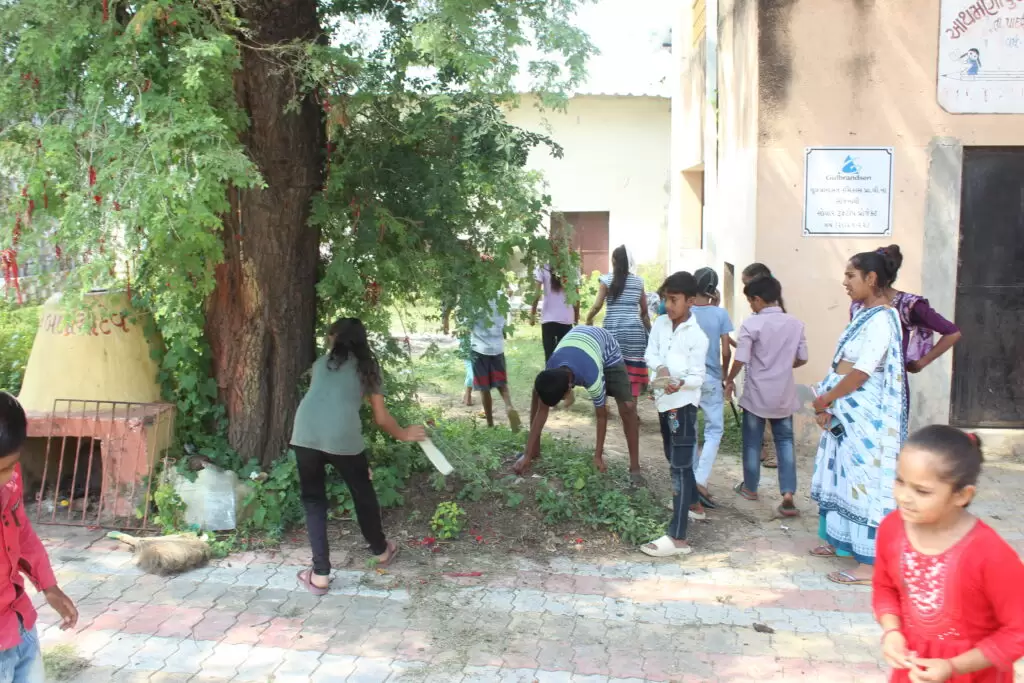
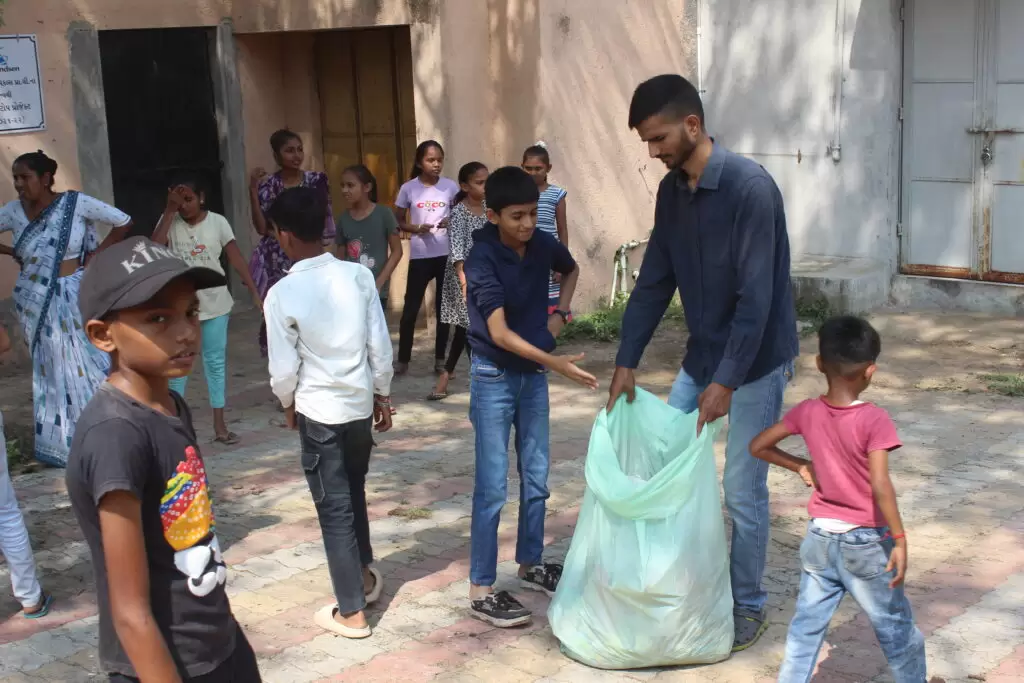
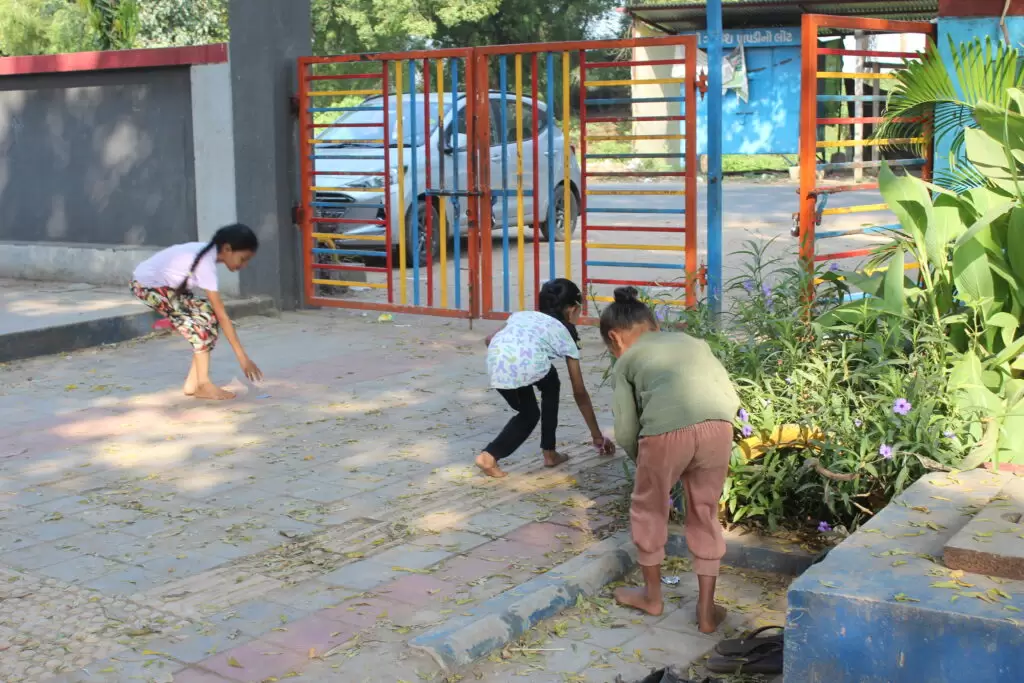
“We will take the responsibility to ensure that our school is clean” said the students at Aathamanpura village during our first interaction with them, and then they engaged in cleaning the school of the plastic wrappers and other waste before stopping to see what they have achieved in just a few short minutes of this focussed action.
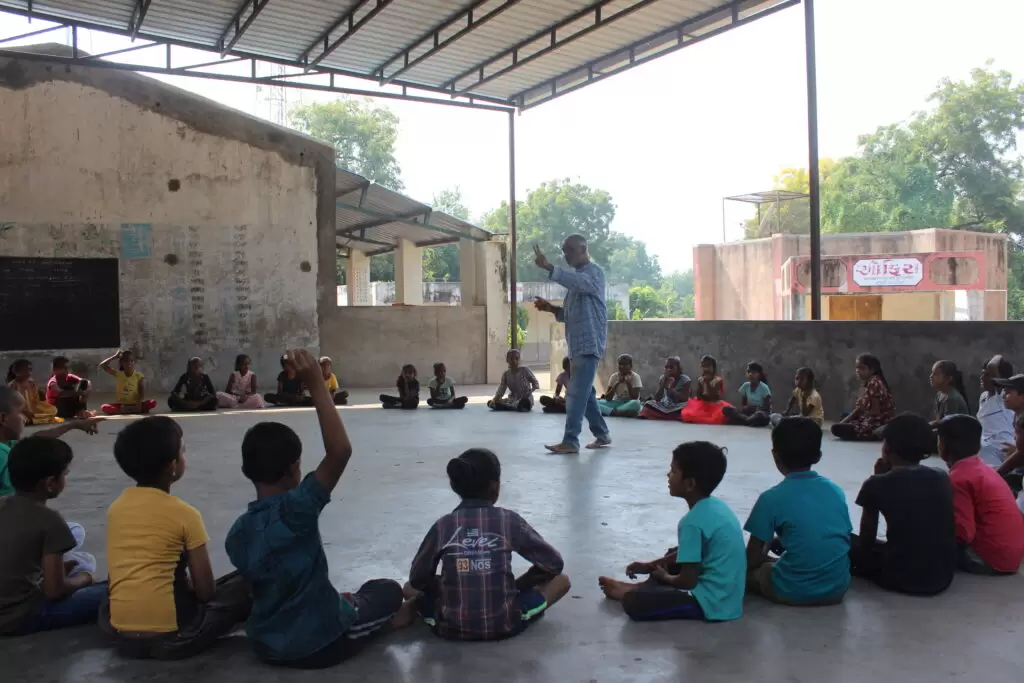
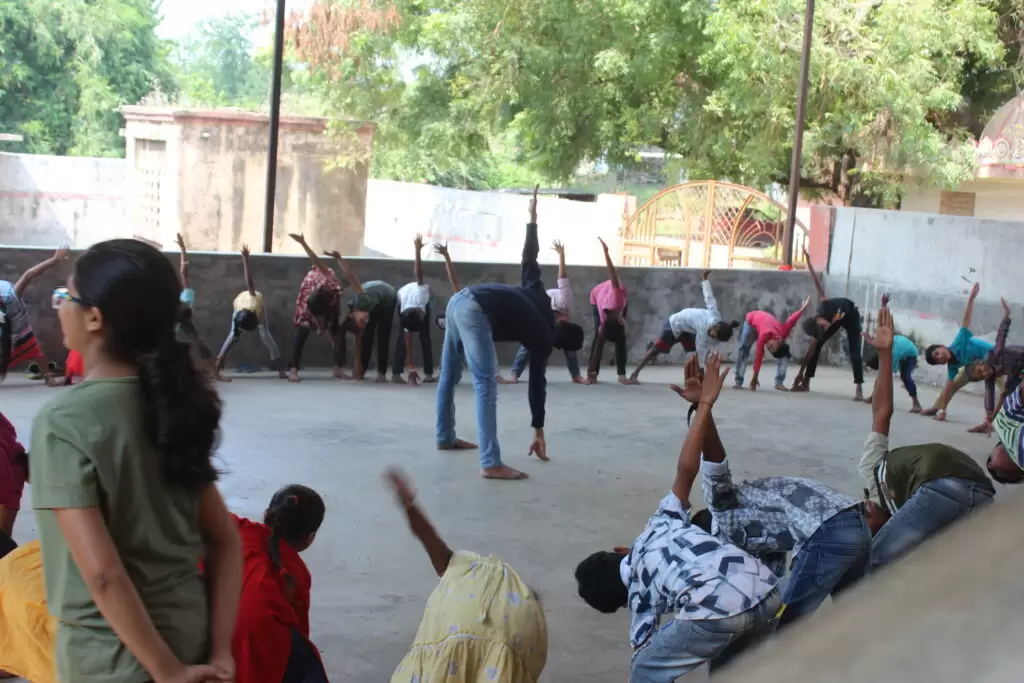
The first session with students supported by Transpek Industries Ltd. at Mahuvad and Aathamanpura was scheduled pre-Diwali on 18-Oct-2025. After much brainstorming about how to begin with these students, the Paper Ball Educational Innovation (www.thepaperball.org) team came up with a plan of a few activities and some reflection questions that shall help with building rapport with these children while at the same time furthering our mutual objectives.
With an intention of keeping the sessions semi- structured, we had planned a few fun activities that aligned with the objectives as well as the rural context that these students come from. For the first session, the objectives were that children become more aware of nature around them and recognize the presence of natural elements (animals, birds, insects, trees, plants and water bodies) around them and that children realize that animals, birds and insects coexist with us humans and are all part of this natural system.
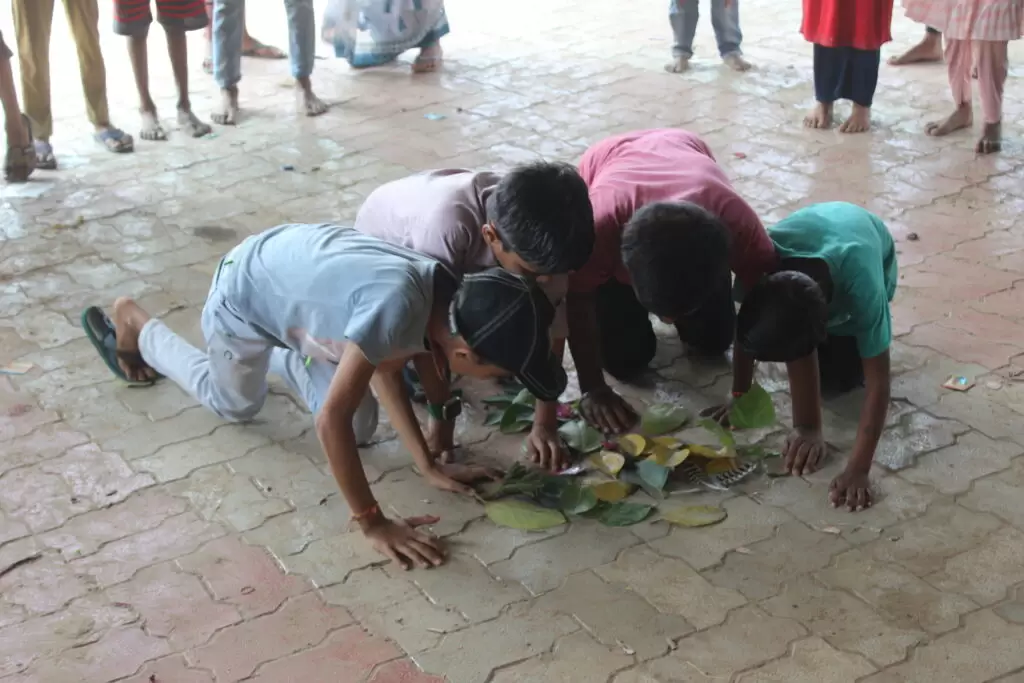
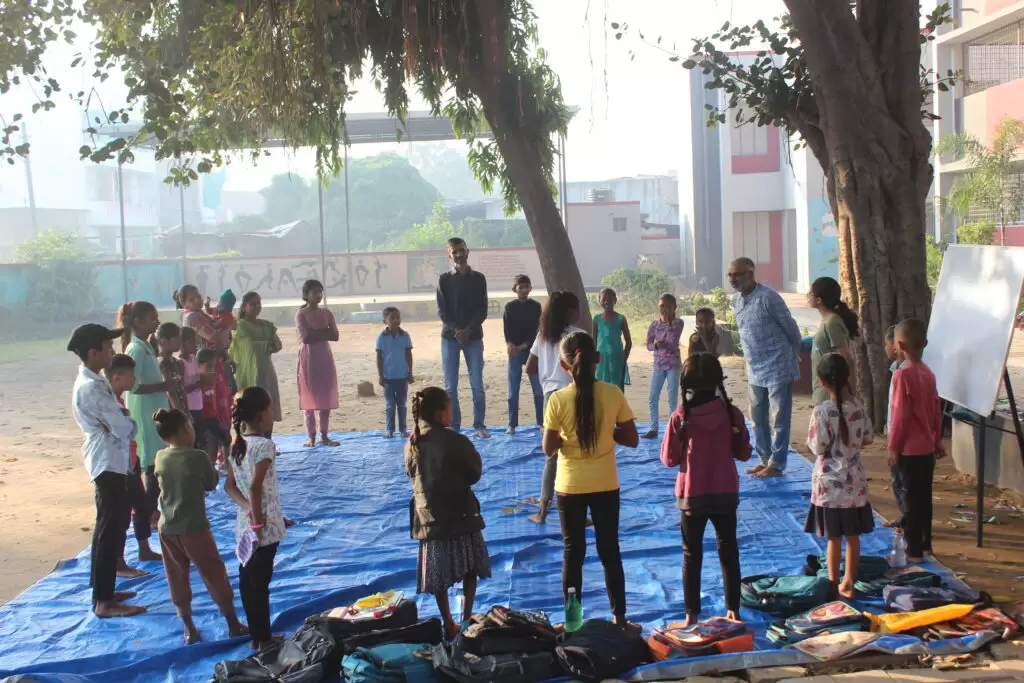
We started with a short introduction where each participant was asked to find something interesting from within nature and bring it to the center of the circle. Most of the children picked up a fallen leaf, a fallen flower, some twigs, stones, and kept them at the center. They then introduced themselves with their name and also shared why they brought, what they brought in the circle. They shared that they liked the colour or the shape of the various leaves or the smell of the flower, or how the twig can be used in multiple ways and that was why they brought that specific thing. Some also shared what they liked in the nature. Interestingly a couple of children had also brought wrappers of “Karishma Supari” and told us they liked it because they consumed it!!
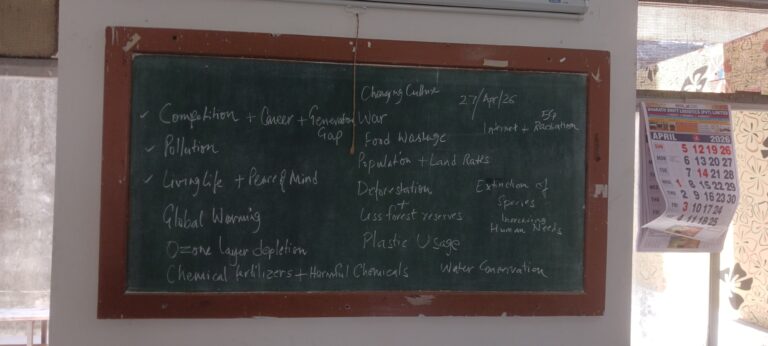
We then moved to getting a context of what part of nature – in terms of animals and birds – do the children see around them daily. On the one hand it was to help them feel amazed at the number of animals and birds that they already have in their vicinity, and on the other it was to help the facilitators know a bit about the local biodiversity that exists. And the facilitators were happy to note how quite a large number of animals co-exist with our participants in both these villages.
The team than moved to a game that would build on the context that they had set so far. The participating children were divided in two teams and each team was shown an image of a animal or bird and they had to act like that animal or bird in a dumb charades fashion. The other team was tasked to identify the animal or bird through this acting. The children had fun during the activity that allowed them to role play as animals or birds.
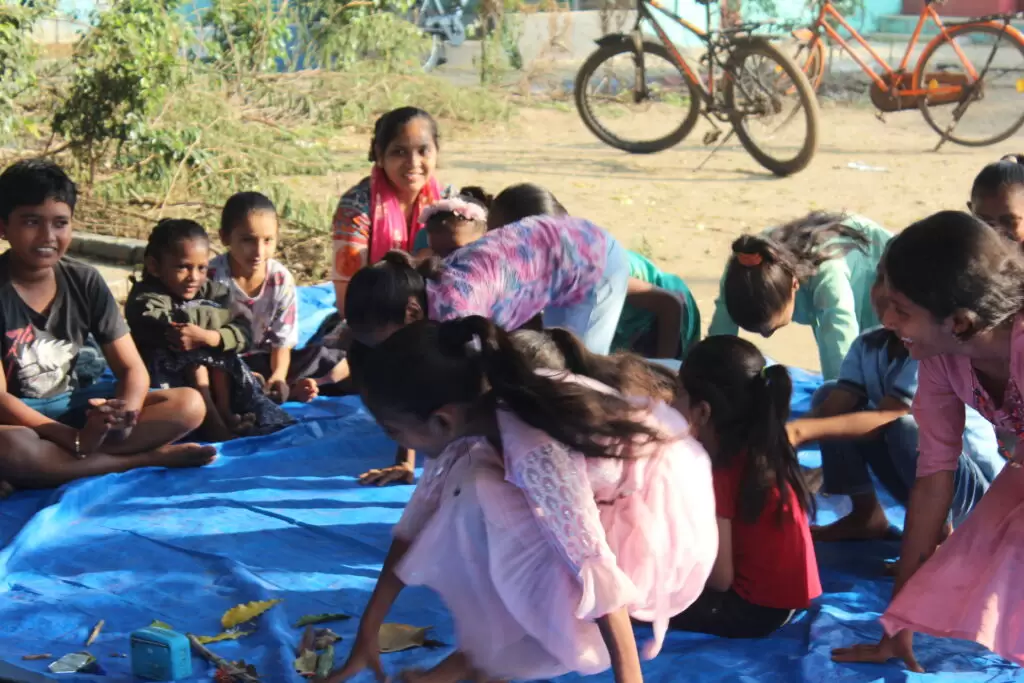
Later during another activity each team was given a chance to hear a recorded animal or bird sound and they had to identify the animal or bird.
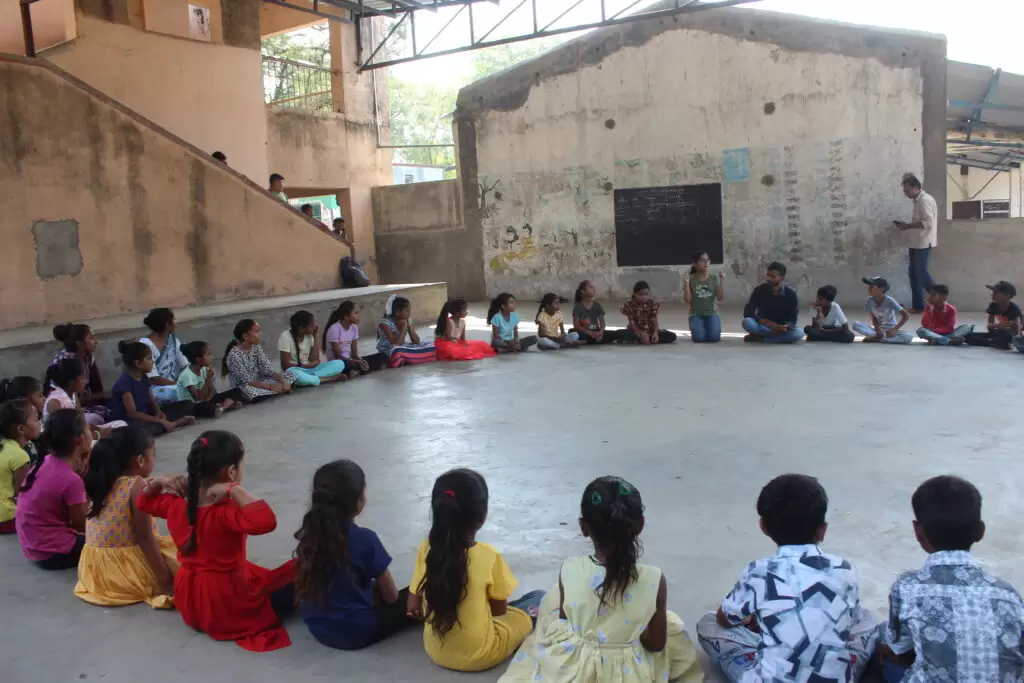
It was story time after this activity and all the participants sat in a circle to hear a nature related story narrated by our team member Aakriti. The story was about a king who saved a pigeon from a kite because that pigeon was seeking safety. The King in the story offered to give away an equivalent piece of his flesh to the kite to save the pigeon. The story carried a message of compassion for animals and other living beings and caring for them.
This story allowed some time for reflection and hearing a couple of stories from the students. The students narrated a poem as well as a story that talked about animals or where animals were the protagonists. This allowed them to think that animals exists closely with us humans.
After the fun and story, there was some time for a bit of discussion on nature and what it means to the participants. A few participants talked about greenery and green spaces, other talked about trees and a few other about the water bodies, some said nature meant lions and tigers to them. To help them think further, the question changed to what they received from nature each day. For many the answer was similar – oxygen from trees. With a bit of prodding students also came up with water, food, wood, clothes, and so on. The idea was to help them understand the role of nature as a giver and we probably gave them some food for thought here.
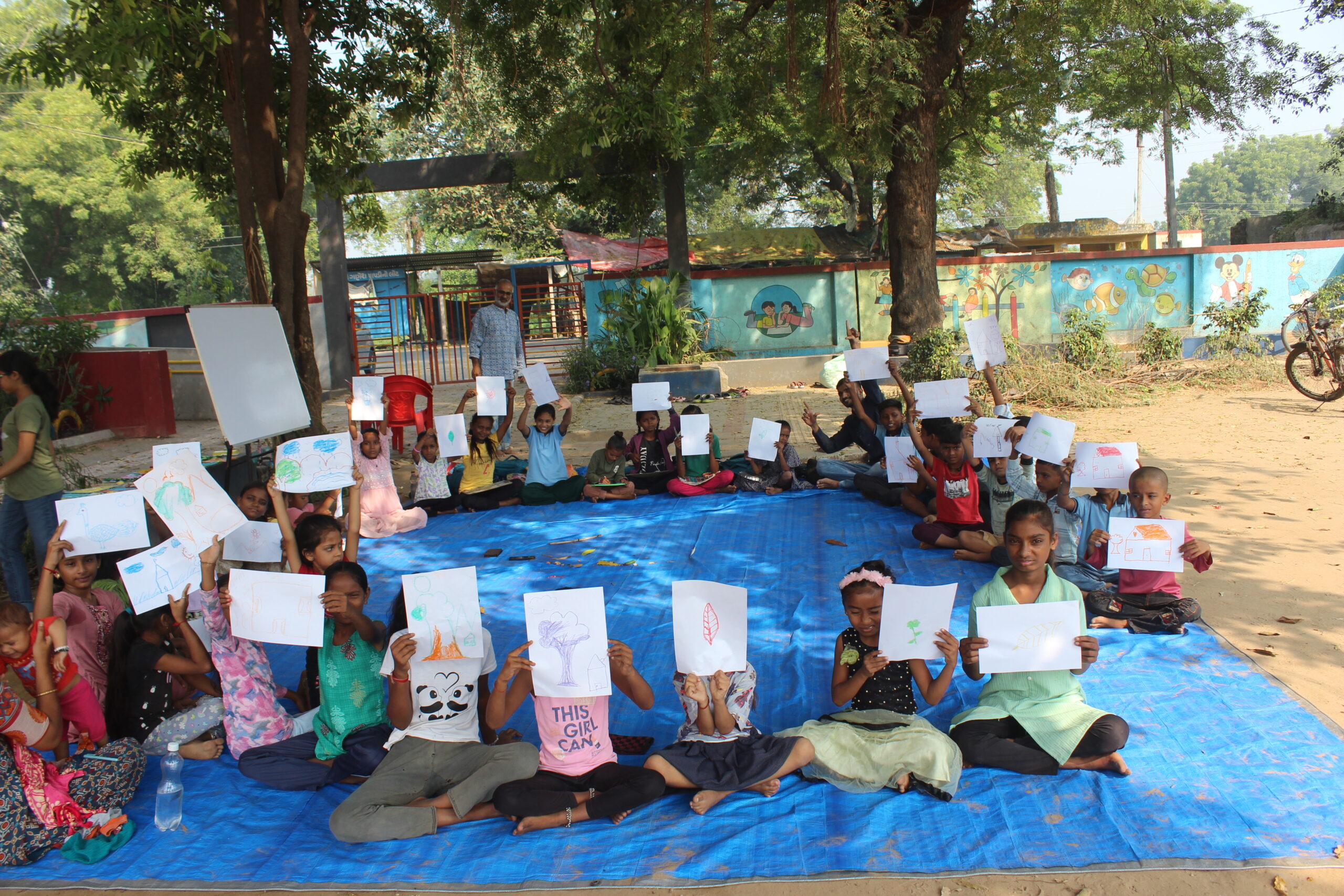
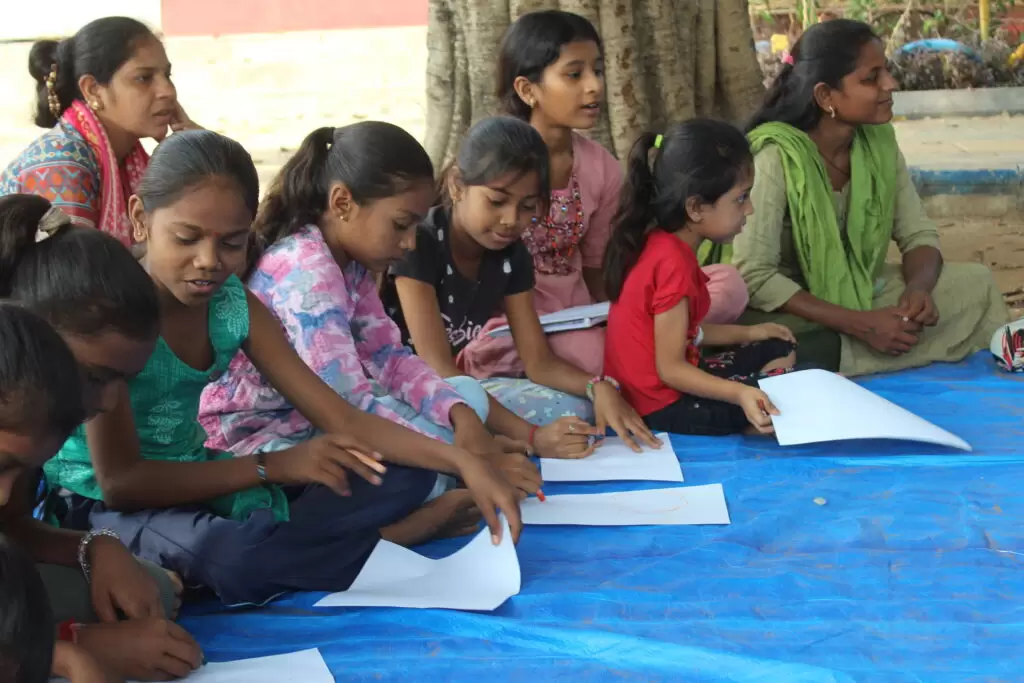
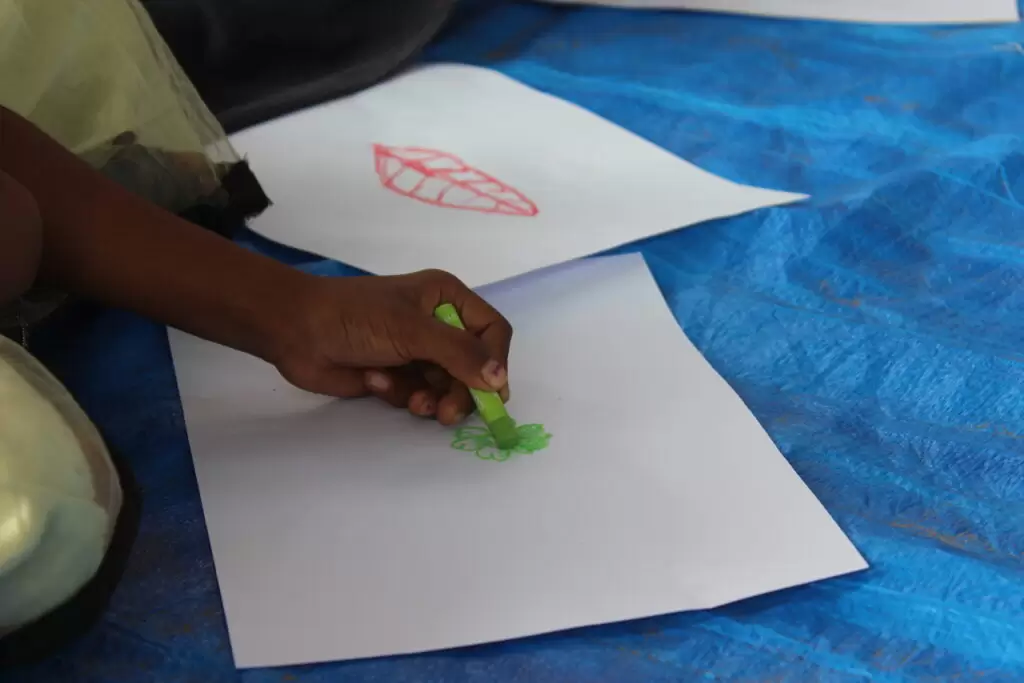
The students were then given some time to look at something interesting from the nature that inspires them as well and then to draw it as they wished. Children spread out to have a closer look at some of the leaves and flowers around and later sat down to put their imagination and creativity on paper. The activity allowed them some fun and connection with nature.
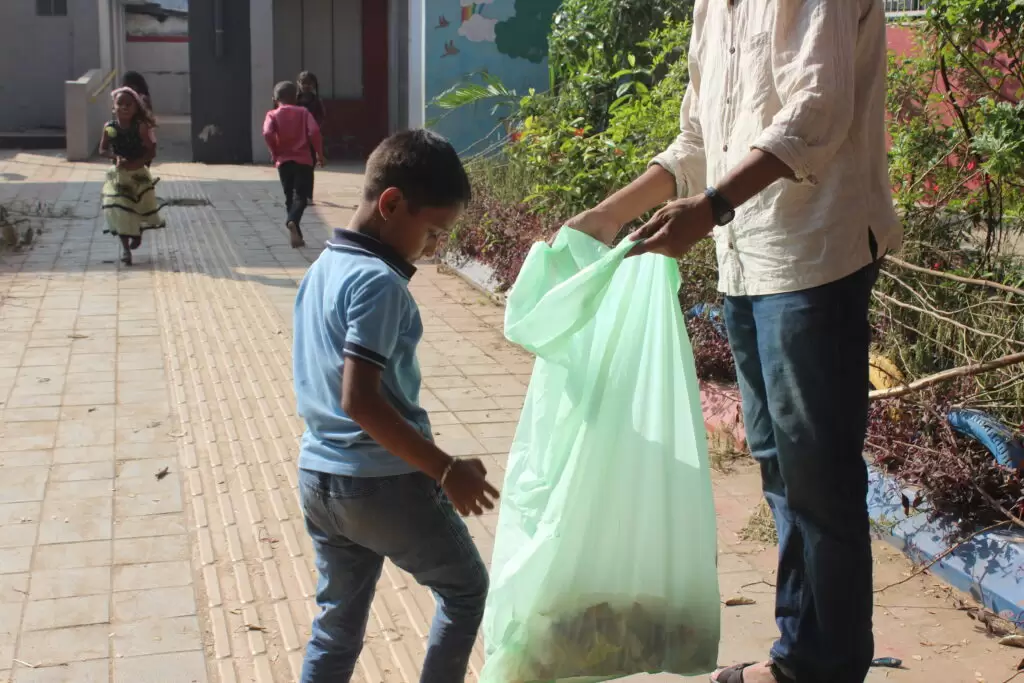
As a final act for the day, we touched upon the issue of school campus being littered with waste and who might have thrown all that waste there. As a part of a short action based environmental activity, we asked if students would be interested in cleaning up the school premises of litter just for 10 minutes. We received a unanimous “yes” and without too many questions everyone spread out to clean as much waste as possible in the next 10 minutes. The waste was collected in the garbage bag that the team brought back to Vadodara where it was properly disposed.
As a parting thought we asked to students about how they will celebrate Diwali and informed the ill-effects of bursting crackers. That the animals and birds have sensitive ears and loud sounds hurt them and then also about the pollution caused by the bursting of crackers. Many promised that they will not burst crackers. We took that on face value J
Children were finally given a short assignment: To look at a small green patch near their homes. Draw the trees in that patch and the animals, birds or insects that they saw there. And to also observe that patch to see how different animals/insects living there interact with each other.
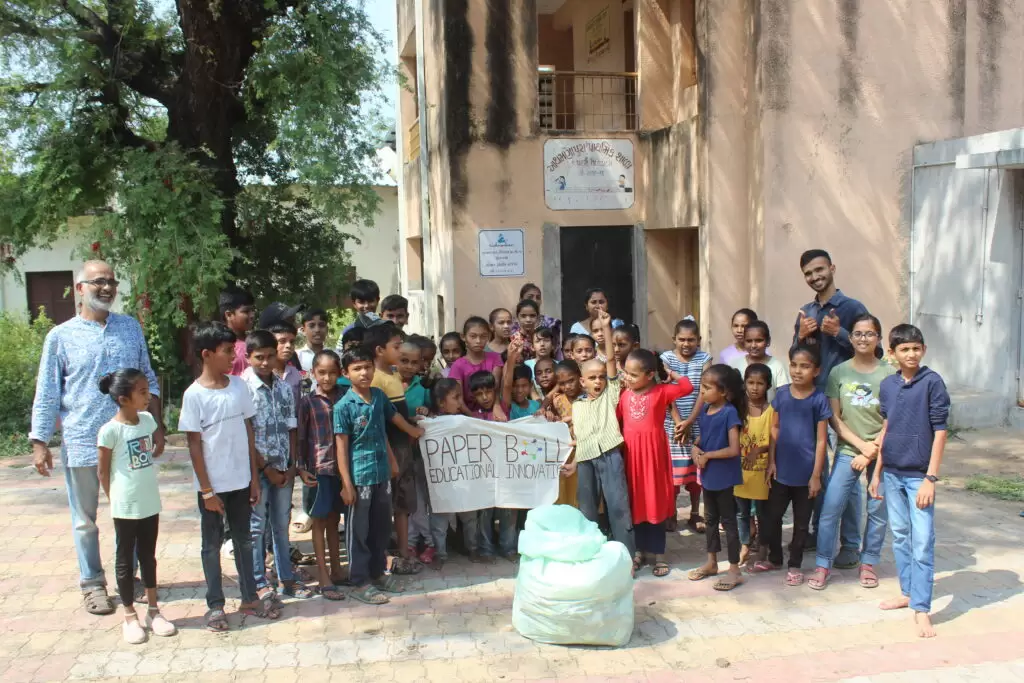
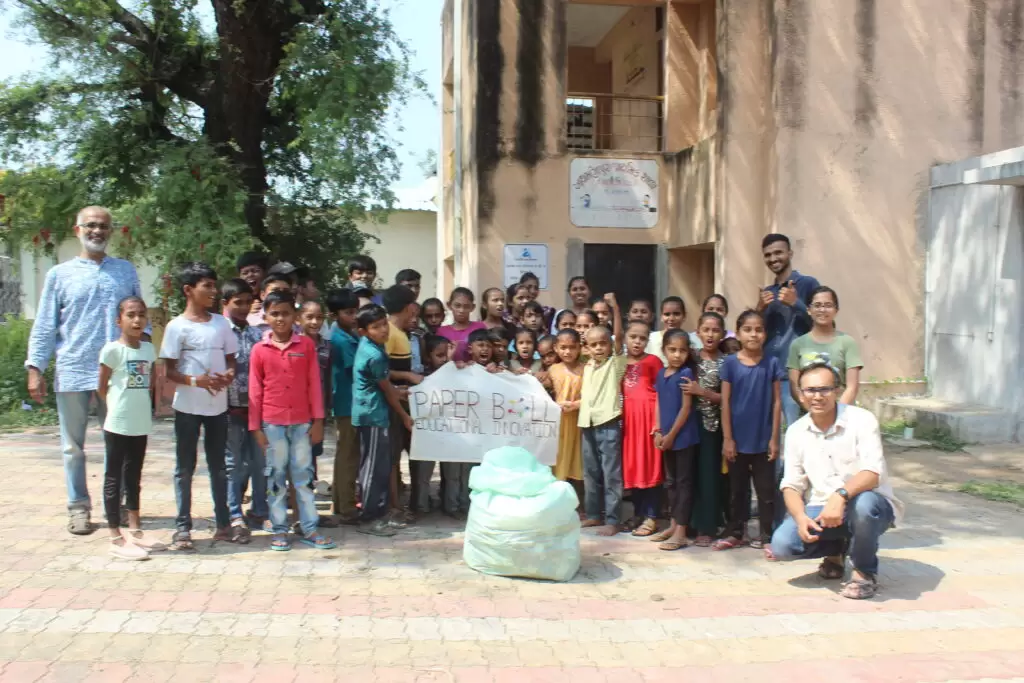
A group photo later we ended our first session, happy with the seeds that we have probably sown.
Photos from Aathamanapura village