
Can We Seed Ball Our Way to Greenery?
In this article, we will look at the intention behind creating seed balls and the science and practical issues that makes it viable or non-viable. If you are someone who cares for the environment or have either organized or participated in the any such seed ball (or seed bomb) making and throwing events, this article is for you. Let us just pause and ask ourselves how this works and whether it is really pro-environment, or are we being (mis)led by a trend that has caught up, is easy to do, easy to market and easy to commercialize?
While I originally intended to write this article last year around monsoons, I couldn’t get to it. But having endured, as well as witnessed, multiple well-intentioned people as well as civil society and environmental organizations harping on seed-balling as a programme to revive and rejuvenate degraded lands, urban areas, forests and what not; it is a good time as any to write about it.
I feel it is prudent to understand a bit of science and nature and then these well-meaning organizations and people as well as their funders can make a note of the same before signing another cheque in the name of making seed ball and greening everything around.
What is a seed-ball or a seed-bomb?
A seed ball, also referred to as a seed bomb, is quite simply a ball of clay, compost, soil or cow-dung (known as substrate) and seed or seeds encapsulated inside this ball. So it mainly consist of seed that shall germinate under right conditions, compost or soil as nutrients, and clay or cow dung as a protective layer.
What is the history of seed balls or seed bombs?
It is understood that seed balls may have been used since ancient times. Indigenous communities have used the technique to spread and scatter seeds in areas that would otherwise be difficult to access. Egyptians are known to have used seed balls to revegetate the areas ravaged by frequent flooding from Nile River. Later, this technique was used by the Japanese Natural Farming proponent and philosopher Masanobu Fukuoka (author of The One Straw Revolution). He used seed balls as a way to disperse seeds without tilling the soil, thereby reducing erosion and preserving soil structure, an important aspect of do-nothing or natural farming propogated by Fakuoka.
Why have the seed balls been used in older times (or before they became so rampant)?
As noted above, there seem to be three main reasons for the use of seed balls in ancient times:
- Spreading and Scattering seeds in areas that are otherwise inaccessible or difficult to reach
- Revegetating large areas of land quickly. Quicker coverage.
- Dispersing seeds in a protective covering to avoid tilling the soil.
Why have seed balls and seed bombs became so hyped-up over the past few years?
The 1970s saw the movement of guerilla gardening, where activists would take over neglected public or private spaces, without authorization, to beautify these urban areas thereby increasing biodiversity, and thereby protest the land-use policies in their way.
Liz Christy (from New York) is believed to have used the term Guerilla Gardening for the first time in 1973 while reclaiming and beautifying vacant plots in her neighbourhood. She and her team made seed balls (or bombs, as guerillas used the term) and threw them into these vacant plots. The seed bombs would germinate once they received the right conditions. Over time, many other countries got its own guerilla gardeners who used the same technique of seed bombing to green or vegetate a vacant area.
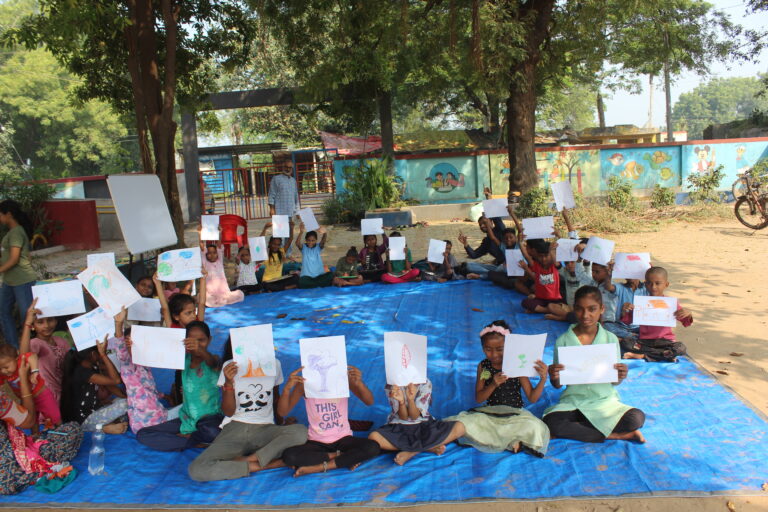
Recently, with the amplifying challenges related to climate change and environmental degradation, many environmental groups have latched onto the practice of making and throwing seed bombs as a means to rejuvenate or green an area. Since this seems to be very easy to design and implement, we see a large number of volunteers, well-intentioned organizations, corporates and even governments eager to have an activity around seed ball making around the rainy seasons (monsoons in India). And therefore you will see a lot of invites for these activities around that time 🙂
Does simply making a seed ball or a seed bomb ensure greening or revegetation?
The short answer is NO.
Unless we understand the science and technique as well as practical challenges behind the seed balls, these initiatives, no matter how well-intentioned are bound to fail.
What are the conditions to make seed balls or seed bombs work?
First let’s see how nature functions.
Nature already has in place multiple mechanisms of seed dispersal to ensure that the seeds from a plant or a tree are dispersed far and wide for the propagation and evolution of a species. Animals or birds that eat the fruits are also, in-turn, responsible for dispersing the seeds with their poop. There are some seeds so light and come with a hairy mechanism that wind disperses it. Then there are other that get stuck to the fur or coat of animals and hence are dispersed. So, in essence nature has already taken care of the seed dispersal. Seeds so dispersed than depend on the right conditions to germinate.
Through seed bombs or seed balls we are in a way trying to do nature’s work by providing additional support for a seed to grow by encapsulating it in a protective layer and supplying some nutrients. So the first question or the condition to checked for is:
A. What kind of seed are we using for encapsuling in the seed ball?
Are we checking for native species or just putting random seeds in the seed bomb? If we put non-native species we are doing more harm then good to the environment and native species.
B. Seed Viability
Are we checking for seed viability and germination percentage? Will the seed germinate on getting the right conditions? Else you are wasting your time.
C. The Pre-Treatment of Seeds
Some seeds may remain dormant in the soil after propagation due to the immature embryo, or chemicals on seed coat for preserving or hard seed coat. These types of seeds require pretreatment. In leguminous trees, mechanical scarification, hot water scarification, soaking in cold water and acid scarification improves the rate of seed germination. After scarification seeds should be shade dried to remove the traces of moisture. It reduces the chances of pre germination of seeds in seed ball.
D. The substrate and nutrient for seed ball
The layers of soil and compost on the seed is meant to protect it from drying out in sun or getting eaten by birds, animals and from blowing away with the wind. They are also meant to provide initial nutrition to the seed to germinate. As per the Manual on Seed Ball Propagation Technology prepared by SIES-Indian Institute of Environment Management, the proper method of preparing of seed balls. You will do well to see if this is being followed. Drying the seed balls is equally important to ensure that they do not break when thrown.
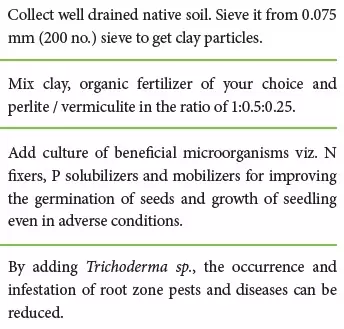
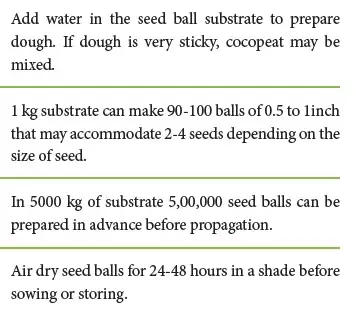
E. The location (THIS SHOULD ACTUALLY BE STEP 1 OF THE PROCESS)
This is perhaps the MOST IMPORTANT aspect to be noted and taken care of. Where are you going to throw the seeds after preparation? This should infact be the first stepbefore doing any other thing related to preparation of seed balls. The whole process becomes unviable and non-scientific if we are not preparing seed balls as per the location. But Why?
Selecting seeds of native species from same climatic conditions where seed ball will be thrown improves the chances of germination.
Native trees species should be selected for propagation along highways, avenue plantation etc.
For forest area the selection of species should be done after proper survey as some tree species may have allelopathiceffects on other species.
Understanding the kind of soil that is in the area where seed ball will be thrown will play a role in selection of seed or species
Does the area get waterlogged? This reduces chances of survival of the seeds.
Seed bombing over steep slopes may lead to seed balls being washed away
So if location where you are going to throw the seed ball is an after-thought, you are setting this up for failure.
In a 2025 study, the reserachers found “Seed encapsulation in seed balls generally reduced germinability and damaged large soft seeds, but ∼20% of seed balls produced seedlings suggesting that with refinement aerial seed ball broadcast could be used to establish native plants at large spatial scales.“
James W. Griffiths, Janice M. Lord, Jessica Paull, Aimee S. E. Pritchard, Andrew Butler, Jennifer Alderton-Moss, Karin van der Walt, Anja McDonald & Kirsty Moran (2025) Viability of seed balls for large-scale restoration of native plant communities in New Zealand, New Zealand Journal of Botany, 63:5, 1115-1131, DOI: 10.1080/0028825X.2024.2432314
PRACTICAL ASPECTS TO NOTE
Let’s also consider some practical aspects of seed ball throwing as an environmental regeneration activity.
Remember, when Fukuoka used seed ball planting method in his agricultural field, that area was under his care (even if it was natural farming – no tilling, herbicide and pesticide free farming), and hence seed ball bombing might have looked as a success. We are no Fukuoka and the situation we are facing is very different. The lands we are seeking to seed bomb are not under our care.
- Urban areas specifically in India hardly have any vacant space left to plant trees. In fact, the trees are being cut to make space for development.
- Second, if we are throwing a seed on a barren land – somehow available to us- it might not have the soil or nutrients available for supporting the growth of seed post germination. And with no one to take care of the plant, it is very difficult to survive.
- In forests specifically we have to be very particular about what seeds or species we are introducing. In fact, we can leave forests to nature which has the intelligence to see what trees will grow there when conditions are right. It already has ample seeds.
So is Seed Ball Making & Throwing Not Recommended?
Understanding the context and taking care of the prerequisites is essential while taking up seed ball making and throwing. The activity itself may look fun and easy to implement but it has a lot of implications on the ecosystem.
As organizations, it is our responsibility to propagate ideas that are feasible and are known to work. A very high percentage of organization that we have come across, do not possess the expertise and neither willing to spend time to understand the implications of the seed ball making and throwing activity.
Use your judgment (and ask questions) before undertaking or participating in activities that make you feel like you have done your bit for the environment.
Why everyone loves seed balling and seed bombing?
It is a high visibility, low-accountability programme that corporates, event managers, funders and civil society organizations love. A lot of people can participate in this programme as a way of contributing to nature. There is near-zero effectiveness of the programme. No one cares. There can be no evaluation of the programme effectiveness. Everyone goes home happy having done their part for the environment. Some organizations even organize special trips to take participants to throw these seed balls in the forest!!
Let us use some logic, and this is also a request to the well-meaning organizations and well-intentioned participants. Seed balls can be a good way of ensuring that native seeds can be made into easy to manage balls with protective and nutrient-rich covering. These balls can be gifted with a stipulation to plant these in places where someone can take care of it – this is a must follow stipulation. Simply throwing and wishing that it survives and grows into a mature plant will only be a wishful thinking. With open spaces anyways becoming scarce, simply throwing these seed balls (ala guerilla gardening) cannot guarantee anything except a small sense of (false) satisfaction.
Summary
Seed ball making and throwing can become an activity that supports environment only when it is taken up with complete reference to the geography, identification of soil and climatic conditions, proper selection of native seeds, pretreatment of seeds as required to increase viability and chances of germination, proper preparation of substrate and nutrient mix, proper selection of time (or season) for the activity.
If your programme does not adhere to these basic rules around the use of seed balls, then perhaps that is not where you should be spending your time.