

Sun-Dimming ‘Tech’– Been There, Done That
Article first published on LinkedIn on 30-Nov-25 by Amit Arora
A cautionary tale for Governments, policy makers and bureaucrats seeking silver bullets in quest to manage climate change through geo-engineering
Recently a climate-tech firm got funding worth about $60 million to cool the planet. Stardust Solutions, a well-funded Israeli-American company at the forefront of sun-dimming technology seems ready to deploy the tech that could potentially reduce the amount of sun’s radiation reaching the Earth and thus reducing temperatures globally. “From Global Warming to Global Cooling.” It is proposing to use high-flying aircraft to dump millions of tons of a proprietary particle (read pollutants) into the stratosphere, around 12 miles above the Earth’s surface. The technology mimics the short-term, nature-induced, global cooling that occurs when volcanoes blow dust and gas high into the sky, blocking a small amount of the sun’s heat.
Sounds Exciting? Let’s rewind to about 200 years:
What was supposed to be the summer of 1816 across Europe and North America, the farmers watched in disbelief as June snows covered their pastures, rivers froze during the height of July, and entire harvests were lost to relentless cold. Food shortages triggered migration, economic instability, and widespread hunger. What caused it?
Not a war. Not a plague. But an act of planetary engineering that no human caused.
In April 1815, Mount Tambora in Indonesia erupted with extraordinary force — one of the most powerful volcanic events in recorded history. Over the following months, millions of tonnes of sulphur-rich aerosols dispersed across the upper atmosphere, forming a thin but persistent veil that encircled the planet. By reflecting sunlight back into space, these particles significantly cooled the Earth’s surface.
The natural eruption was not an act of human intention, but its effects offered a profound demonstration of how even a minor alteration in the amount of sunlight reaching the Earth could disrupt agriculture, livelihoods, and social stability on a global scale.
Scientists today point to Tambora as the most potent demonstration of how altering the amount of sunlight reaching Earth can change everything — rainfall, seasons, oceans, economies, and the stories future generations tell about survival.
Although Tambora was a natural phenomenon, it set an important historical precedent. It revealed that the climate system is exquisitely sensitive to changes in atmospheric composition, especially when those changes affect how much solar energy reaches the planet’s surface.
More than a century later, industrial societies inadvertently repeated this lesson. Throughout the mid-twentieth century, rapid industrial expansion led to enormous emissions of soot, sulphates, and other aerosols into the atmosphere. Unlike greenhouse gases (GHGs), these airborne particles had a cooling effect because they scattered sunlight and stimulated cloud formation. By the 1960s and 1970s, scientists began to notice a surprising trend: despite rising carbon dioxide levels, global average temperatures were either stabilizing or slightly decreasing. Some climatologists even wondered whether the world might be entering a new cooling phase. What was actually happening, however, was that humanity had unintentionally dimmed the planet. When nations enacted clean-air laws in the 1980s and 1990s to protect public health, aerosol pollution sharply declined. Almost immediately, the underlying warming caused by GHGs surfaced with renewed pace, revealing that the earlier cooling had simply masked the accumulating heat.
This historical interplay between aerosols and climate is crucial for understanding current debates around solar radiation modification, also known informally as sun-dimming technology. Today, as climate impacts intensify, some scientists and policymakers are revisiting the idea of deliberately introducing reflective particles into the upper atmosphere to reduce global temperatures. Proposals include injecting sulphates, brightening marine clouds, or creating artificial reflective surfaces in the stratosphere — all intended to partially imitate the cooling effects of volcanic eruptions like Tambora. Advocates argue that such methods could buy valuable time while societies transition away from fossil fuels. However, many scientists remain deeply cautious, noting that the same historical events that illustrate the power of atmospheric modification also reveal its dangers.
Sun-dimming is not merely a technical procedure; it is a planetary experiment with profound implications for ecosystems, weather patterns, and geopolitics. Changes in sunlight and atmospheric chemistry could potentially alter the monsoon systems, shifting rainfall away from some regions while delivering excessive precipitation to others. This could destabilize food production in parts of Asia, Africa, and South America, where billions depend on reliable seasonal rains. Some modelling studies suggest potential damage to the ozone layer, a reminder that the last time humanity unintentionally interfered with upper-atmospheric chemistry — through chlorofluorocarbons (CFCs) — the consequences were severe and global. Moreover, once initiated, a solar-dimming program might need to be maintained for decades or even centuries. If it were ever halted abruptly, the planet could experience a sudden, sharp warming known as “termination shock,” as decades of suppressed heat returned rapidly to the surface.
Are we purposely underestimating the butterfly effect of such modifications? The pandora’s box that it might open!!
Alongside environmental risks, sun-dimming raises complex political questions. Who would have the authority to operate such a system? Who would decide acceptable temperature targets, or determine how much cooling is too much or too little? And most importantly, who would bear responsibility if certain regions experienced worsened droughts or erratic weather as a result? The atmosphere does not respect national boundaries, and any intervention at planetary scale would inherently redistribute climate impacts, creating winners and losers. These uncertainties have prompted many environmental organizations, and even some governments, to call for global moratoria or strict governance frameworks before any field testing is attempted.
The broader historical pattern is clear: whenever humans have attempted to alter natural systems at large scales — whether through pesticides, industrial emissions, river diversions, or agricultural overexpansion — the unintended consequences have often overshadowed the initial goals. Tambora’s volcanic plume, industrial-era pollution, and the modern ozone crisis all highlight the same theme: atmospheric processes are interconnected and sensitive, and even small modifications can cascade through climate, ecology, and society in unpredictable ways. It is therefore not surprising that many scientists argue that solar radiation modification should never distract us from the essential and proven solutions of reducing greenhouse-gas emissions, restoring ecosystems, and transitioning to sustainable energy systems.
Solutions to wicked problems can never be merely technological
The question is not whether humanity has the technological capacity to dim the sun. The question is whether we fully understand the implications — and whether the history of unintended consequences should give us pause. The desire for a “silver bullet” is understandable, especially in a moment of escalating climate anxiety. But the planet’s climate is not an engineering puzzle with a single elegant solution. It is a deeply complex, interconnected system that responds to interventions in ways we cannot always predict.
If Tambora taught the world anything in 1816, it was that altering sunlight, even unintentionally, reshapes everything beneath it. Today, as discussions of sun-dimming technologies enter mainstream policy debates, history’s quiet warnings gain renewed relevance. Before humanity attempts deliberate modifications on a scale that even Tambora never intended, it may be wise to reflect on how often technological quick fixes have drifted off course — and how a silver bullet, aimed in haste, can easily miss its mark.
It’s easier to work on symptoms than on the underlying cause. We need to take the holistic approach to figure out the solutions.
A Different Kind of Courage
This article is not an argument against innovation or technology. Rather, it is an invitation to humility. To understand our space in the larger scheme of things. To understand that ecocentricity, and not anthropocentricity, is the need of the hour.
Real courage may lie not in reaching for the atmospheric thermostat, but in doing the harder work: cutting emissions, changing consumption, restoring ecosystems, re-learning balance.This requires leaving our current comfort zone and taking action – each person, not just a few technological companies serving us with a silver bullet of redemption.
Tambora’s shadow still stretches across time, reminding us that even natural disruptions of sunlight can transform civilization. We would be unwise to cast such a shadow ourselves — deliberately.
Sun-dimming may sound like a silver bullet, but history teaches that silver bullets often ricochet.
And the planet, already wounded, cannot afford another misfire.
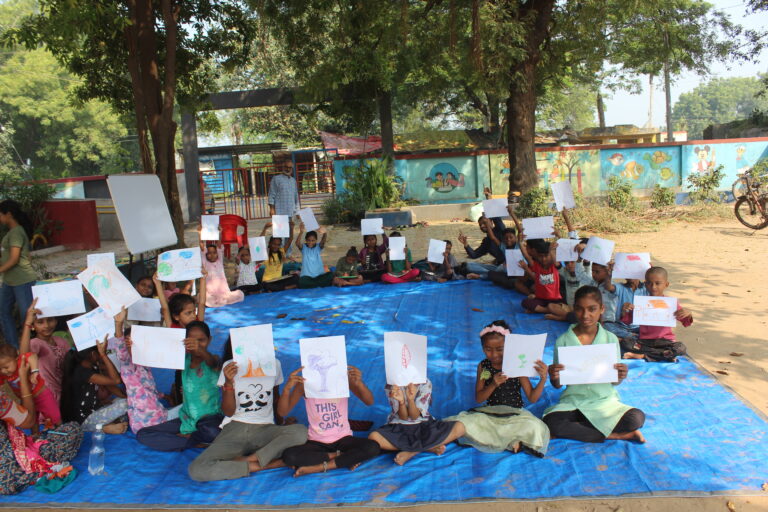
At Paper Ball Educational Innovation we are trying to take the hard way by building “communities that care” (ctc) for the planet. We believe that it can only be through the small action of each one of us that we can really see a force maximisation and build momentum to overcome the wicked and interconneted problems of environmental degradation, biodiversity loss and planetary warming that we are facing today. Technology can only act as an enabler once we understand humanity’s place in the scheme of things (which is definitely not at the top of the pyramid of our own making)